 Aiman
Should You Really Be Training the Same Muscle Every Single Day?
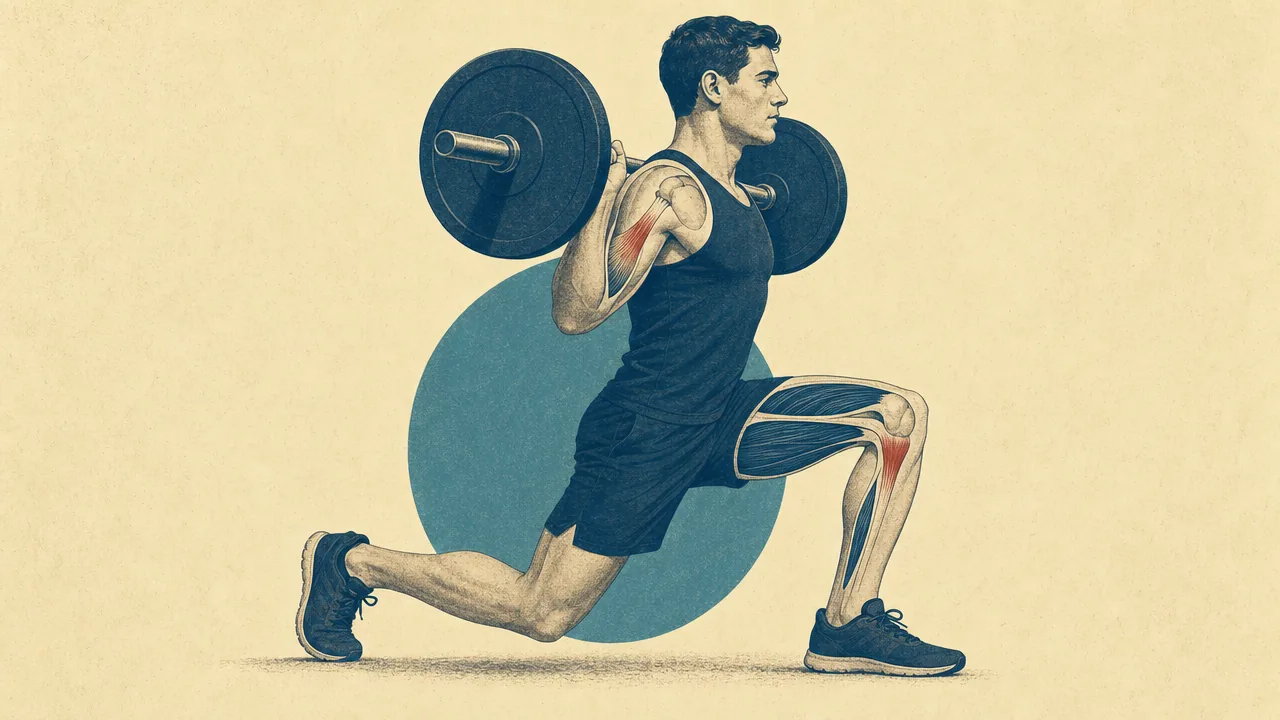
Ask why almost every training program gives a muscle one or two days off before hitting it again, and the answer sounds solid: muscle protein synthesis runs for 24-48 hours after a hard session, rebuilding the tissue you just broke down. Interrupt that window with another hard session and you’re supposedly cutting the rebuild short.
It’s a clean story. It also isn’t why full body every day fails for most people, because the muscle part turns out to adapt to daily frequency better than the story gives it credit for.
Soreness is not a readiness signal
Eric Helms, a muscle-growth researcher who also competes at the top level of natural bodybuilding, pointed out something that runs against most people’s intuition. If a session is hard enough to cause real DOMS, force production is at its worst on the day of the session itself, then recovers progressively from there. The point where soreness typically peaks often lines up with the point where force production is already back near baseline.
In other words, the muscle can be ready to go again well before the soreness says so.
That gets reinforced by the repeated bout effect: the more often a muscle sees the same stimulus, the less damage and soreness it produces each time. The tissue is learning to handle repetition more efficiently. Soreness isn’t meaningless, but it isn’t a good enough reason on its own to skip a session, and muscle has more daily-frequency capacity than it usually gets credit for.
The real bottleneck isn’t muscle
Several tissue types adapt to training at very different speeds: muscle, the nervous system, bone, and fascia adapt relatively fast, while ligament, tendon, and cartilage adapt much more slowly. The fast group tends to have a decent blood supply. The slow group doesn’t, mostly because it’s far less vascularized than muscle, so the remodeling process, including new collagen synthesis, runs at a fraction of the speed.
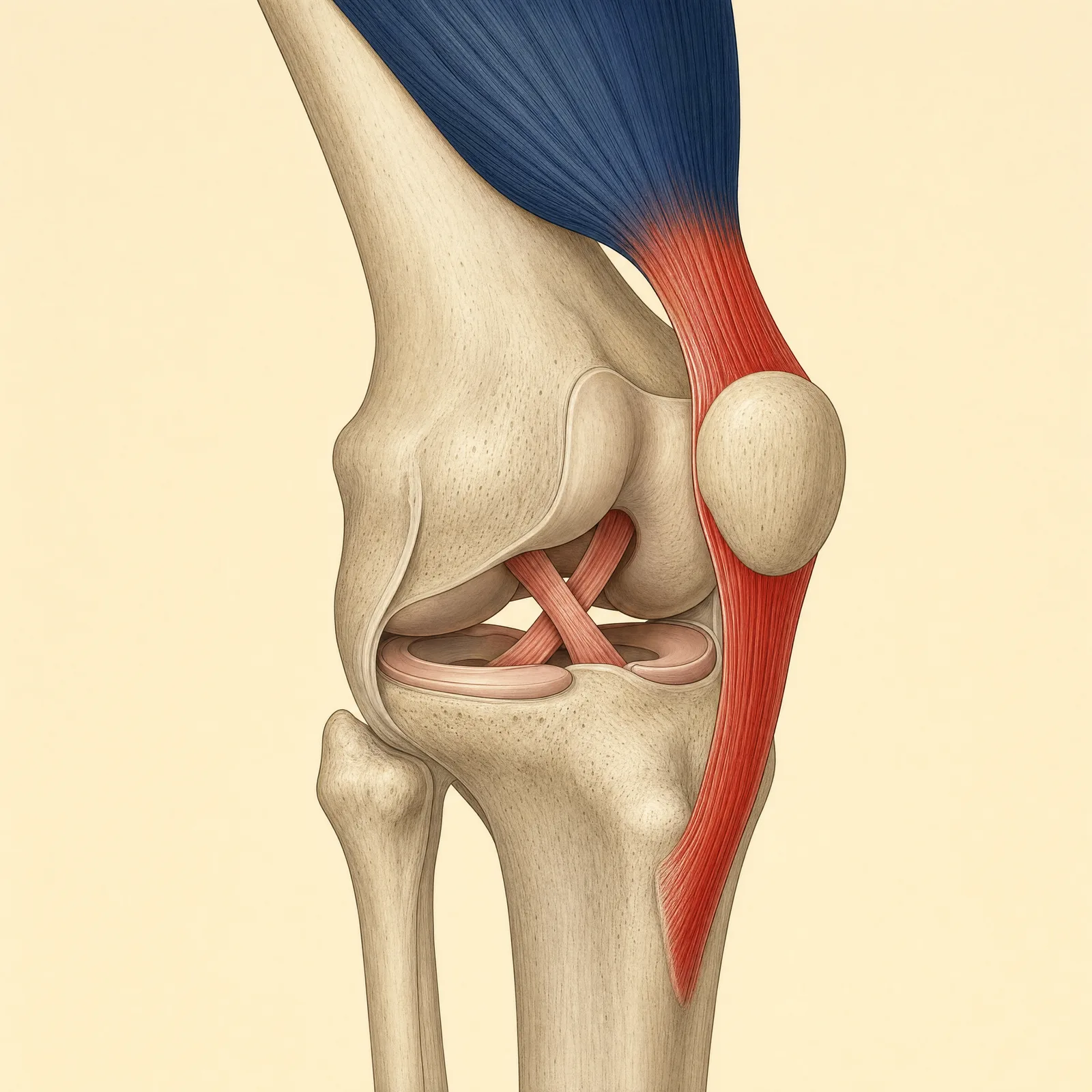
Push the same intensity into that tissue day after day without accounting for its slower adaptation curve, and you’re building the conditions for tendinitis: chronic inflammation from repeated load that outpaces the tissue’s ability to keep up.
This is the part worth sitting with: the question of “why can’t I train hard every day” was never really about muscle. It’s about the connective tissue that attaches muscle to bone.
Why the classic splits don’t solve this
Push/Pull/Legs, Upper/Lower, bro splits, even full body three times a week: however well designed, they all rest on the same assumption, that giving the tissue a full day off lets it heal.
Except full rest doesn’t actually heal tendon. These splits end up giving the slowest-recovering tissue exactly the kind of recovery it needs least, while muscle, which didn’t need that much time off, gets most of the benefit.
Rest doesn’t fix it
Tendon that’s inflamed and painful doesn’t respond to rest the way you’d expect. The pain usually does subside, since nothing is loading it anymore. But the underlying damage was never rebuilt, because rebuilding requires mechanical load to trigger new collagen synthesis. The moment you train again, the pain comes back, because the original problem was never solved.
Worse, this tends to compound with age. Small injuries that never fully healed accumulate over time.
Two things cause most of these injuries, and both are avoidable.
Bad load management. Increasing volume or intensity too fast, jumping more than roughly 30% at once, is a common trigger. Call it under-preparation rather than overuse: tendon needs a much longer runway to adapt than muscle does, so a jump that feels fine to the muscle can still be too fast for the tendon attached to it.
Momentum. Bouncing the load at the bottom of a rep (the bar off the chest, the thighs and calves compressing at the bottom of a squat) creates the kind of stimulus tendon handles worst. Olympic weightlifters use momentum in nearly every session, but their tendons have adapted to that stimulus over years of exposure. Without a strength or power-specific goal, the simpler rule of thumb is to control the bottom of every rep. It’s safer for the tendon, and controlled tempo tends to build muscle faster too.
What works: isometrics
Even with perfect load management, injury can still happen if you train often enough for long enough. One style of training reliably accelerates healing and builds tendon back stronger than it was: isometric training, contracting the muscle without moving the joint.
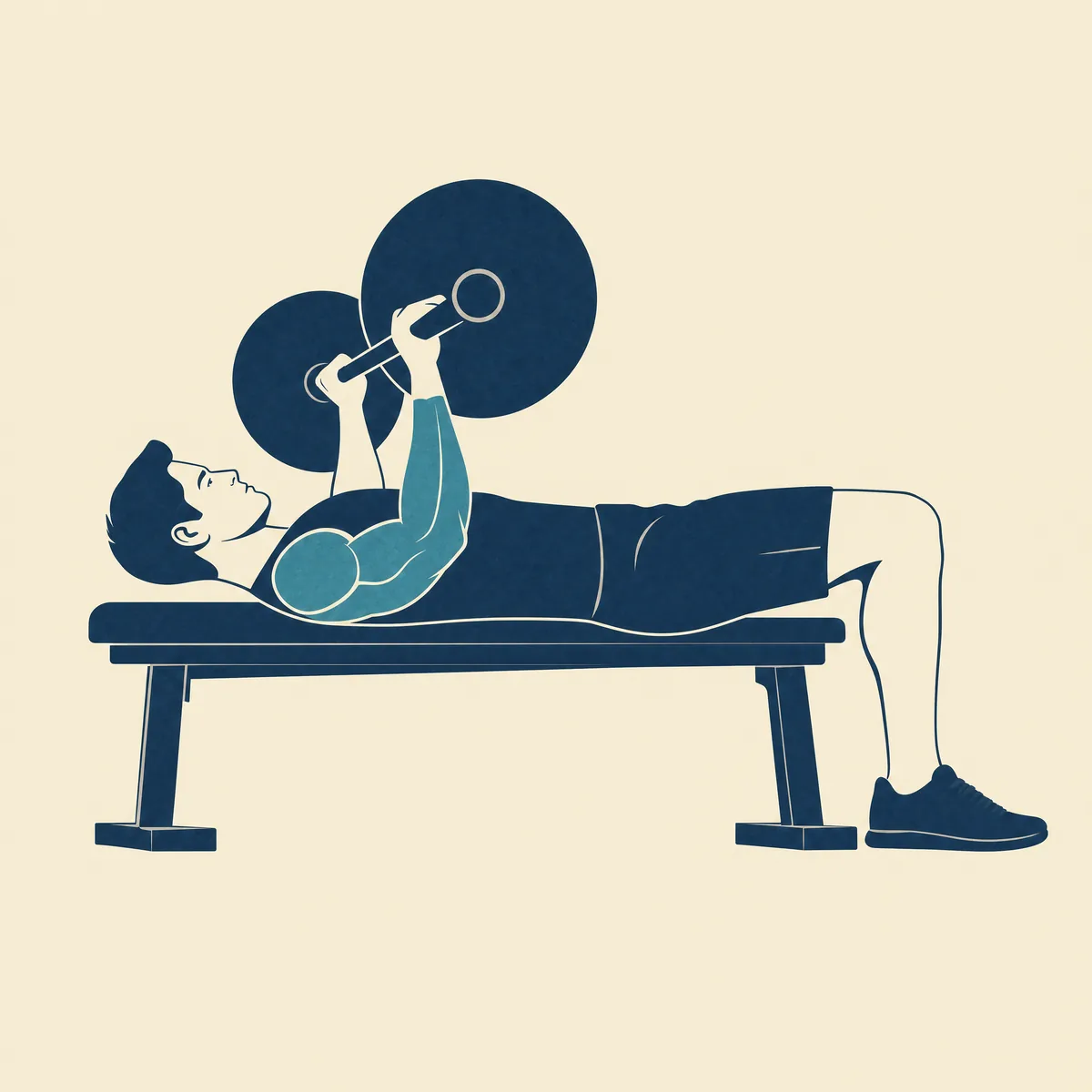
Hold a contraction for around 30 seconds and something specific happens: stress relaxation. The muscle shortens slightly while the tendon lengthens and loses some tension under that static load. That process triggers tendon cells to start synthesizing new collagen.
The duration matters for a specific reason. In dynamic movement, the body tends to route load toward the strongest part of a tendon and skip the weaker parts, simply because the strong part is ready first. Hold a static position long enough, roughly 30 seconds, and load gets forced across the entire tendon, damaged sections included. That’s what gives the whole structure a signal to rebuild, not just the part that was already healthy.
There’s a structural payoff too. In an injured tendon, collagen fibers are usually disorganized, closer to a tangle than to parallel strands. Isometric loading helps new fibers grow in a more linear, parallel pattern, which is meaningfully stronger and can bear more load than scar tissue laid down at random.
There’s an immediate benefit too: isometrics have a genuine analgesic effect. A 30-45 second hold can reduce pain for two to three hours afterward, enough to stay active and keep rehabbing without being in disabling pain the whole time.
And because isometrics involve no fast movement, they remove jerk, the sudden change in acceleration that’s one of the main drivers of connective-tissue injury. The building stimulus ends up close to maximal, with the risk of further damage close to none.
Two variants. Overcoming isometrics push or pull against an immovable load (pressing a barbell into a locked pin). Yielding isometrics hold a load in a static position (a wall-sit, a paused bench press at the sticking point).
What to expect. Some discomfort during the hold is normal and fine, as long as it stays under about 4/10 and doesn’t get worse the next day. If either of those breaks, that’s the signal to reduce load rather than push through.
Frequency. Acute injury: 3 sets, twice a day. Rebuilding after injury: 3-4 times a week. Maintenance on healthy tendon: 5-10 minutes after a normal session.
The fuller protocol: aim for roughly 70% of max contraction, hold for 30 seconds, and repeat every other day or three times a week, which gives the tissue the roughly 36 hours it needs to complete collagen synthesis after being loaded. Light loading can start remarkably early, even two days after an injury or surgery under medical supervision, and appears to speed the return of function by up to 25% compared to full rest. Collagen or gelatin paired with vitamin C, taken 30-60 minutes before a session, appears to help supply raw material for the repair.
Is daily actually better, or just an option?
If muscle can genuinely handle this much frequency and rest doesn’t even fix the tendon problem, the obvious question is: why isn’t everyone already training this way? Two reasons are fairly mundane. Most training advice is still built around the old muscle-recovery story, so tendon capacity and isometric loading never even enter the conversation. And doing daily frequency safely takes a level of load management, tempo control, and exercise rotation that most programs, and most lifters, skip entirely.
But there’s a third, less flattering reason worth admitting up front: it might not actually be necessary. Here’s the honest complication: most of the strongest evidence on training frequency says the opposite of what this piece has argued so far.
When researchers match total weekly volume across different frequencies, frequency itself tends to stop mattering. Colquhoun et al. found volume, not frequency, drove strength gains when comparing 3x and 6x a week. Two separate meta-analyses, from Grgic et al. and from Ralston et al., both found the frequency effect disappears once volume is equated across conditions, and several individual trials point the same way. If that’s right, daily-max studies like the ones cited above might just be showing the effect of extra total volume, not something special about training every single day. The same volume spread across three or four higher-volume sessions could plausibly get you there too.
There’s also a real caution worth sitting with. Androulakis-Korakakis et al. ran a daily-max pilot on ten competitive powerlifters, and the results were wildly inconsistent. Two of the five who completed it actually got weaker. Daily max-effort training isn’t obviously safer or more effective than well-designed lower-frequency training at the same volume, especially for someone who’s already reasonably trained.
Cox et al.’s headline number, a 29% strength gain in 34 days, deserves one more caveat too. Testing a 1-rep max repeatedly is itself a skill, and separate research on 1RM test-retest reliability suggests some of that gain is likely just getting better at performing the test, not a true increase in the muscle or tendon’s underlying capacity.
So where does that leave the program below? Treat it as an aggressive, interesting hypothesis worth experimenting with, not a settled “better than everything else” method. The tendon-specific argument in this piece, that rest doesn’t heal a tendon and isometric loading does, stands on its own regardless of how the frequency debate shakes out. That part isn’t in dispute the way the frequency question is.
A concrete way to run this
One important caveat before the program itself: what follows is a practical synthesis of the principles above, not a protocol that’s been tested as one package in the studies referenced here (those studies looked at a single muscle or a single lift, not a full body daily routine, and as the section above lays out, the case for daily frequency itself is genuinely contested). Treat it as a reasonable application of separately validated pieces worth trying, not a proven-superior method, adjust it to your own joints and training age, and get it checked by a professional if you have injury history.
Structure: A/B alternating, all seven days. Train the same movement patterns (squat, push, pull, hinge) every day, but alternate the specific exercise between Day A and Day B. Muscle gets the daily stimulus it can handle, and the tendon doesn’t get hit at the exact same angle day after day.
| Pattern | Day A (Mon / Wed / Fri / Sun) | Day B (Tue / Thu / Sat) |
|---|---|---|
| Squat | Back squat, 3×6-8 | Front squat or goblet squat, 3×8-10 |
| Push | Flat barbell bench, 3×6-8 | Incline dumbbell press, 3×8-10 |
| Pull | Weighted pull-up, 3×6-8 | Barbell row, 3×8-10 |
| Hinge | Romanian deadlift, 2×8-10 | Hip thrust or trap-bar deadlift, 2×10-12 |
| Isometric | 5-10 min on whichever joint felt most loaded | Same as Day A |
The rules that make it work: control every rep, no bouncing at the bottom. Progress load by no more than 5-10% a week, and never jump anywhere near 30% at once. Deload roughly 40% every fourth week: since this structure has no traditional full day off, a periodic deload replaces that function at the program level instead of the session level. Isometrics aren’t optional here. They’re what keeps the tendon in the game while the muscle gets trained daily.
If a spot starts hurting: mild pain that doesn’t worsen the next day is normal, so keep monitoring it. Pain that becomes consistent or worse means switching that joint to the rebuilding protocol, isometrics 3-4 times a week, with dynamic load reduced on whatever movement triggers it. Sharp or acute pain means the acute protocol, and a professional opinion if it isn’t improving within a few days.
The volume math is at least part of why this could work. Seven sessions at roughly 3 sets per pattern works out to around 21 sets per pattern per week, split across two variations, meaningfully more than a conventional 3-day split’s 9-12 sets per pattern. Whether that extra volume needs to come from daily frequency specifically, or could come from fewer, bigger sessions instead, is exactly the open question from the section above. The A/B rotation and the strict-tempo rule are the two things stopping that extra volume from turning into the exact injury it’s meant to avoid, regardless of which structure delivers it.
The short version
Muscle adapts to daily frequency better than most people assume; soreness isn’t a reliable signal for when it’s ready again. Tendon is the actual bottleneck, and passive rest doesn’t heal it, isometric loading does. Whether daily frequency itself beats a well-designed lower-frequency plan at matched volume is genuinely unsettled, and the strongest meta-analytic evidence leans toward volume being what matters, not frequency. What isn’t unsettled: if you do push frequency up, manage load carefully (gradual progression, controlled tempo, exercise rotation) and build tendon capacity through isometric loading instead of just waiting for rest to do something it doesn’t do.
References
- Cox, C. E., Zourdos, M. C., et al. (2025). Efficacy of Daily One-Repetition Maximum Bench Press Training in Physically Active Males and Females. n = 7, 34 consecutive days of daily 1RM testing. Average 1RM gain: ~29%. All participants reported joint and muscle pain throughout the protocol. Journal of Exercise Physiology Online.
- Ethier, J. Built with Science: 30-day daily-training experiment. n = 3, one side of the body trained daily against a twice-weekly comparison side, growth measured via MRI.
- Zourdos, M. C., et al. (2016). Daily 1RM squat testing. n = 3, competitive powerlifters/weightlifters, 37 days. About 10% gain, no significance testing reported. Nutrición Hospitalaria.
- Colquhoun, R. J., et al. (2018). “Training Volume, Not Frequency, Indicative of Maximal Strength Adaptations.” n = 28, 6 weeks. Journal of Strength and Conditioning Research.
- Grgic, J., et al. (2018). Meta-analysis of training frequency studies: the frequency effect disappears once weekly volume is equated. Sports Medicine.
- Ralston, G. W., et al. (2018). Meta-analysis of 12 volume-equated frequency studies, finding no independent effect of frequency. Sports Medicine - Open.
- Androulakis-Korakakis, P., et al. (2018). Daily-max pilot study on n = 10 competitive powerlifters over 10 weeks. Highly variable individual results, with 2 of 5 completers losing strength. Sports (Basel).